
You're filling out paperwork for your child's next well-child visit when you realize it has been a while since their last dental appointment. Maybe your three-year-old hasn't had a first visit yet, or your seven-year-old is due for another checkup. Knowing when children should see the dentist and how often they should return can make it easier to build dental care into your family's routine.
For most children, dental checkups and cleanings are recommended every six months, beginning around age one or when the first tooth appears, whichever comes first. Regular visits give the dental team an opportunity to monitor developing teeth, identify concerns early, provide preventive care, and help children become familiar with the dental office. Early visits also give us a chance to educate parents about dietary and hygiene habits that can help prevent early childhood cavities, as well as discuss habits such as prolonged pacifier use, bottle feeding, and thumb sucking that may affect oral development.
At Sustainable Smiles in Pleasanton, Dr. Young, Dr. Duong Ta and our team work with families through every stage of childhood. Whether your child is ready for their first dental visit or due for their next cleaning, we're here to help you understand what to expect and how to keep their oral health on track. It is never too early to start building a positive relationship with your child's dental team, helping prevent avoidable dental problems and giving both you and your child confidence in the dental office.
Key Takeaways
- Most children should visit the dentist every six months, beginning around age one or when their first tooth appears.
- Some children may benefit from more frequent visits based on their oral health, cavity risk, or other clinical factors.
- Pediatric dental visits typically include a cleaning, examination, fluoride when appropriate, and monitoring of tooth and jaw development.
- Dental X-rays are recommended based on a child's age, development, and individual risk factors.
- Regular visits can help identify cavities, gum concerns, developmental changes, and other issues while they are easier to address.
- Starting dental visits early helps children feel at ease with regular dental care.
- Your child's dentist can recommend a visit schedule based on their individual needs.
The Every-Six-Months Rule and Why It Exists
For most children, visiting the dentist twice a year provides a consistent opportunity to monitor their teeth and address developing concerns. The schedule also allows the dental team to provide professional cleanings and reinforce good brushing and flossing habits at home.
Plaque forms continuously on teeth, and when it isn't removed effectively, it can harden into tartar. Professional cleanings remove buildup that brushing and flossing cannot.
Primary teeth also deserve careful attention. Although they eventually fall out, baby teeth are important for eating, speaking, maintaining space for permanent teeth, and supporting healthy oral development. Cavities in primary teeth can progress quickly, so regular examinations help identify changes before they becoYou're filling out paperwork for your child's next well-child visit when you realize it has been a while since their last dental appointment. Maybe your three-year-old hasn't had a first visit yet, or your seven-year-old is due for another checkup. Knowing when children should see the dentist and how often they should return can make it easier to build dental care into your family's routine.
For most children, dental checkups and cleanings are recommended every six months, beginning around age one or when the first tooth appears, whichever comes first. Regular visits give the dental team an opportunity to monitor developing teeth, identify concerns early, provide preventive care, and help children become familiar with the dental office. Early visits also give us a chance to educate parents about dietary and hygiene habits that can help prevent early childhood cavities, as well as discuss habits such as prolonged pacifier use, bottle feeding, and thumb sucking that may affect oral development.
At Sustainable Smiles in Pleasanton, Dr. Young, Dr. Duong Ta and our team work with families through every stage of childhood. Whether your child is ready for their first dental visit or due for their next cleaning, we're here to help you understand what to expect and how to keep their oral health on track. It is never too early to start building a positive relationship with your child's dental team, helping prevent avoidable dental problems and giving both you and your child confidence in the dental office.
Key Takeaways
- Most children should visit the dentist every six months, beginning around age one or when their first tooth appears.
- Some children may benefit from more frequent visits based on their oral health, cavity risk, or other clinical factors.
- Pediatric dental visits typically include a cleaning, examination, fluoride when appropriate, and monitoring of tooth and jaw development.
- Dental X-rays are recommended based on a child's age, development, and individual risk factors.
- Regular visits can help identify cavities, gum concerns, developmental changes, and other issues while they are easier to address.
- Starting dental visits early helps children feel at ease with regular dental care.
- Your child's dentist can recommend a visit schedule based on their individual needs.
The Every-Six-Months Rule and Why It Exists
For most children, visiting the dentist twice a year provides a consistent opportunity to monitor their teeth and address developing concerns. The schedule also allows the dental team to provide professional cleanings and reinforce good brushing and flossing habits at home.
Plaque forms continuously on teeth, and when it isn't removed effectively, it can harden into tartar. Professional cleanings remove buildup that brushing and flossing cannot.
Primary teeth also deserve careful attention. Although they eventually fall out, baby teeth are important for eating, speaking, maintaining space for permanent teeth, and supporting healthy oral development. Cavities in primary teeth can progress quickly, so regular examinations help identify changes before they become more extensive problems.
Preventive visits can also help families understand what is happening with their child's oral health and what steps can support healthy teeth between appointments.
If you have questions about the cost of regular dental care, our patient center provides information about available options.
When Your Child's Dentist Might Recommend More Frequent Visits
Twice-yearly appointments are appropriate for many children, but some may benefit from more frequent monitoring. Your child's recommended schedule depends on their individual oral health and risk factors.
A dentist may recommend visits every three to four months when a child has:
- A history of cavities or early tooth decay
- Difficulty maintaining effective brushing and flossing
- Frequent exposure to sugary foods or drinks
- Certain medications or health factors that affect saliva production
- Other factors that increase the risk of developing dental problems
More frequent appointments provide additional opportunities to monitor these concerns and reinforce preventive care. Your child's dentist can recommend the schedule that best fits their needs.
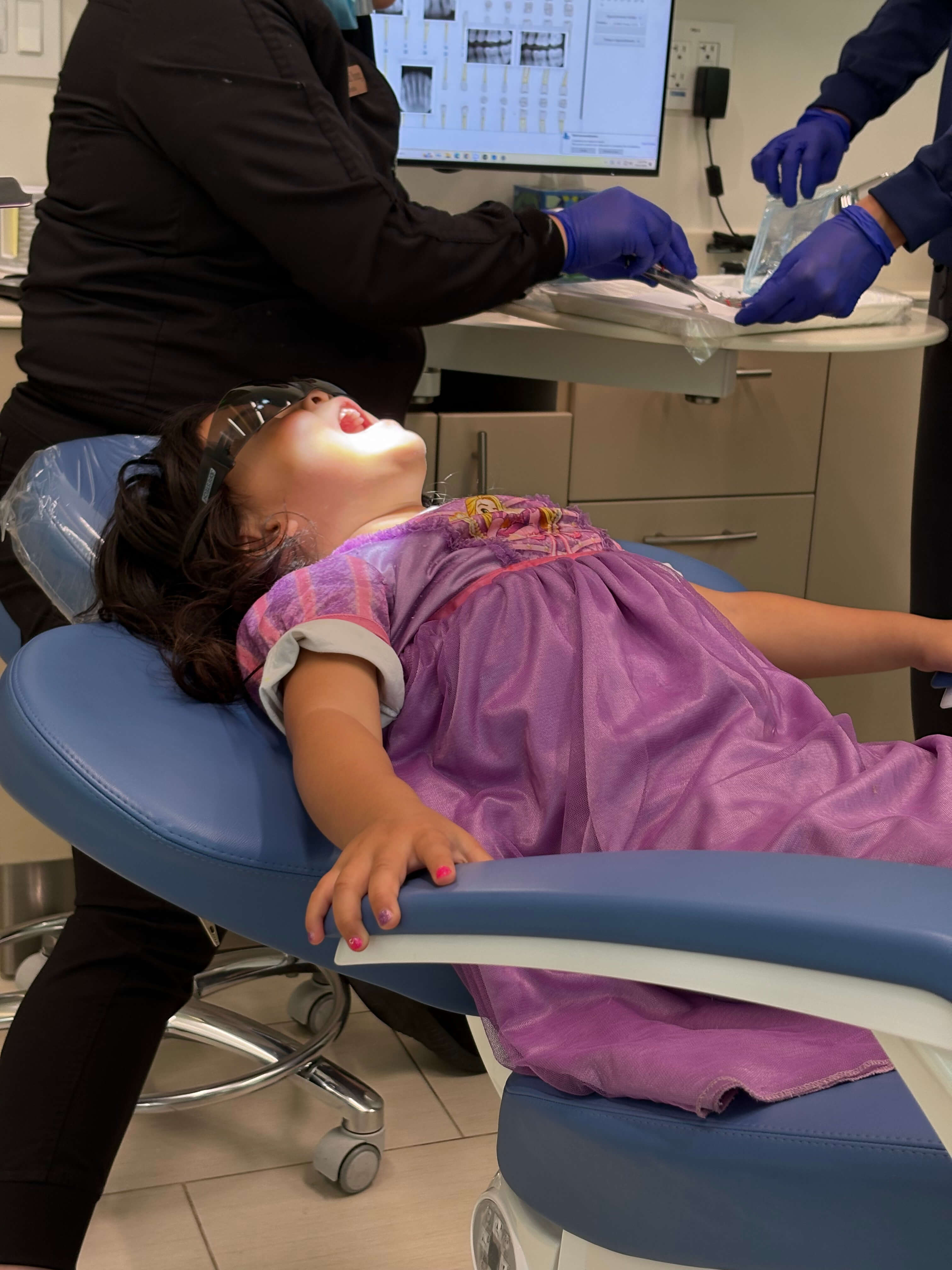
What Actually Happens at a Pediatric Dental Checkup
If you've been putting off that first visit because you're not sure what to expect, here's the honest answer: it's a lot calmer than you're probably imagining. A typical checkup at Sustainable Smiles is built around one idea, that your child should leave feeling proud of themselves, not rattled.
Here's how a visit usually unfolds. The dentist starts by getting to know your child a little, because a three-year-old who feels seen is a three-year-old who opens their mouth. From there, the dentist does a gentle cleaning using a small, soft-bristled brush and a polishing paste that comes in kid-friendly flavors. They'll show your child each tool before using it, which sounds small but makes a real difference. Then comes a fluoride treatment to help strengthen enamel while those baby teeth are still doing their job.
When the dentist comes in, they examine:
- Each tooth for early signs of decay or developmental concerns
- The gums and soft tissues for anything that needs attention
- Your child's bite and jaw development
- Whether X-rays are appropriate based on your child's age and risk factors
The whole visit is designed to feel like a conversation, not a procedure. You're welcome to stay right beside your child the entire time. And if you have questions about anything the team finds, they'll walk you through it in plain language, no guessing, no brushing off your concerns. That's just how care works here.
How to Prepare Your Child For a Dental Visit
Knowing what to expect at each developmental stage is genuinely useful, but a lot of dental anxiety actually gets built at home, long before anyone walks through a clinic door. The way parents talk about the dentist in everyday conversation shapes how children feel about it, often more than the appointment itself.
One of the most common mistakes is overpromising. Telling your child "it won't hurt at all" or "there's nothing to worry about" sounds reassuring, but if anything feels uncomfortable or just unfamiliar, you've lost their trust. Honest and calm works better: "The dentist is going to look at your teeth and count them, and they might use a little tool that feels funny." Simple, true, and not loaded with dread.
Playing pretend dentist at home is surprisingly effective. Let your child be the dentist first. Count their stuffed animal's teeth, use a toothbrush as a prop, take turns. It demystifies the whole thing before it happens in real life.
Reading age-appropriate books about dental visits can help too, because children process new experiences better when they've already "seen" them in a story. The goal is familiarity, not hype. Keep your own tone neutral and matter-of-fact, and your child will likely follow your lead.
Why Regular Dental Visits Matter
Consistent dental care does more than address cavities. Each visit gives your child's dental team another opportunity to monitor how their teeth, gums, bite, and jaw are developing.
Regular appointments can help children become familiar with the process of visiting the dentist and give them a consistent place to ask questions and learn about caring for their teeth. As children get older, those routines can become part of their broader approach to personal health.
Early dental care also gives parents an opportunity to learn more about brushing techniques, fluoride, nutrition, developing teeth, and other factors that can affect oral health. As your child grows, their dental needs change, so regular visits allow preventive recommendations to change with them.
Choosing a dental practice that can care for your child through these different stages can make it easier to maintain that continuity over time. At Sustainable Smiles in Pleasanton, we provide pediatric and family dental care designed to support children as their smiles develop.
Schedule Your Child's Next Dental Visit
Whether your child needs their first dental appointment, a routine six-month cleaning, or a closer look at a specific concern, the next step is simply to schedule a visit. Our team can answer your questions, explain what to expect, and recommend an appropriate schedule based on your child's needs.
At Sustainable Smiles, Dr. Young and our team welcome children and families from Pleasanton and the surrounding communities. You can learn more about our approach to pediatric dentistry, or contact our office directly at 925-223-6027. to schedule an appointment.
Regular dental care starts early, and we're here to make that process a comfortable, practical part of your family's routine.
